Why You Need a Professional Stump Grinding Service After Tree Felling
When a large tree comes down, whether through storm damage, disease, or planned tree felling, the visible part is only half the story. The real work begins below ground level. A tree stump left in the ground is more than an eyesore. It becomes a tripping hazard, a magnet for pests like termites and ants, and a stubborn obstacle that prevents new planting or construction. Many homeowners in Cape Town and the broader Western Cape assume that cutting the trunk low enough is the end of the job. In practice, the stump continues to host root growth that can damage foundations, pathways, and underground pipes. That is where a proper stump grinding service becomes essential, not optional.
I have been working as a tree surgeon in this region for over a decade, and I still meet clients who try to handle stump removal themselves. They rent a small grinder from a tool shop, spend a weekend wrestling with tangled roots, and end up calling a professional anyway. A stump grinder is a powerful, dangerous piece of machinery. It requires experience to operate safely and effectively, especially on the varied soil types we have around Cape Town, from clay-heavy plots near the coast to the rocky ground on the slopes of Table Mountain. Without that experience, you risk damaging underground services or leaving a root system that reshoots and regrows.
A professional stump grinding service does not just grind the visible stump down to a few inches below grade. It addresses the entire root crown and the major lateral roots that can cause future problems. The grinding depth matters greatly. A typical machine can reach 150 to 300 millimetres below the surface, but on sites where you plan to replant or lay turf, going deeper prevents sinkholes and uneven settling. An arborist or tree surgeon will assess the species and age of the stump before deciding on the approach. For example, a pine stump left in sandy soil may deteriorate quickly, but a gum tree stump can persist for years and even send up suckers if not ground deep enough.
Stump removal is not the same as stump grinding, though people often use the terms interchangeably. Removal involves digging out the entire stump and root ball, which usually requires an excavator and leaves a large hole. Grinding, on the other hand, uses a specialised stump grinder to chip the wood away in place. The resulting wood chips and mulch can be used as ground cover or removed as part of site cleanup. For most residential properties in Cape Town, grinding is the more practical and cost-effective option. It disturbs less of the surrounding garden, leaves no gaping pit, and can be completed in a matter of hours rather than days.
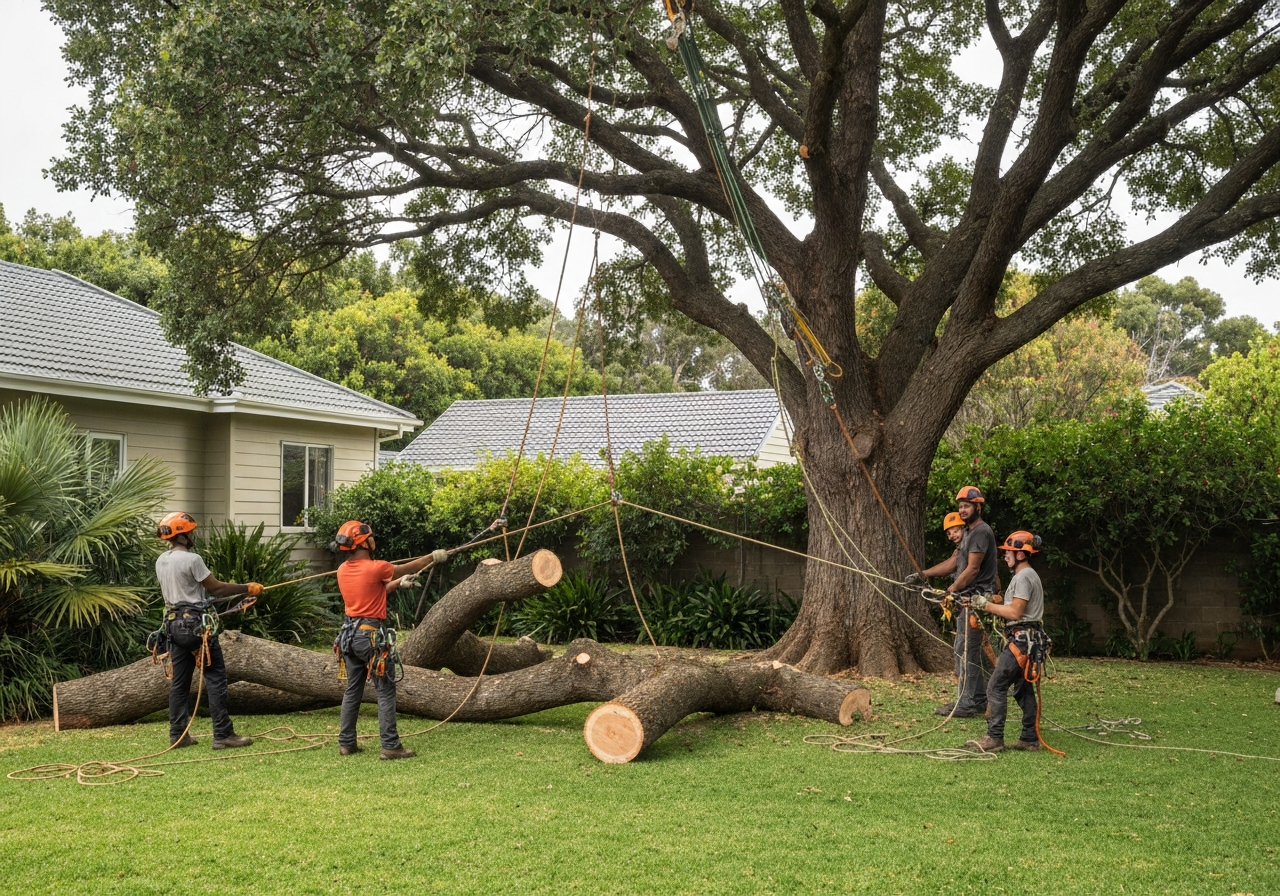
There is also the matter of municipal regulations. In the Western Cape, several local authorities have bylaws regarding tree removal and stump disposal. A professional service will be familiar with these rules and can ensure that the job meets compliance. This is especially relevant if the tree was protected or if the property falls within a conservation area. An on-site quote from a reputable company will usually include a check of these requirements, saving you from fines or enforcement notices later.
I recall a job in Constantia where the client had a massive oak stump right next to their driveway. The roots had started to lift the paving stones, creating a hazard for anyone walking to the front door. A well-known landscaping firm had quoted them for stump removal using an excavator, but that would have meant tearing up half the driveway and the adjacent flower bed. Instead, a tree surgeon came in with a tracked stump grinder that could navigate the tight space. Within four hours, the stump was ground down to 250 millimetres below grade, the wood chips were spread as mulch on the flower bed, and the driveway was safe again. That kind of judgment call comes from experience, not from a manual.
Safety gear is another reason to leave this work to the professionals. A stump grinder spins a cutting wheel at high speed, throwing wood debris and stones in every direction. Operators need heavy-duty gloves, eye protection, ear defenders, and steel-toed boots at a minimum. Even then, the real skill lies in reading the ground. Hidden rocks, old fence wire, or concrete debris can cause the machine to kick back violently. I have seen too many DIY videos end with a trip to the emergency room. A professional service not only has the right safety gear but also the training to handle unexpected obstacles without injury.
Beyond safety, there is the question of time and convenience. A homeowner who rents a grinder for the weekend is under pressure to finish the job quickly, often in poor weather or when the ground is saturated. Wet soil makes grinding more difficult and increases the risk of the machine getting bogged down. A professional stump grinding service works year-round and has access to machines suited to different conditions. They can also coordinate the job with other services like land clearing, tree felling, or wood chipping, so you get one crew handling the whole process from start to finish.
Some people worry about the cost of hiring a specialist. In my experience, the price is almost always lower than the combined expense of renting equipment, buying fuel, paying for disposal, and taking time off work. An on-site quote from a qualified arborist will give you a clear breakdown based on the stump diameter, species, location, and any access issues. You are paying for precision and peace of mind. A poorly ground stump can lead to a lawn that looks like a minefield of subsiding patches, or worse, a root system that continues to spread and cause structural damage. That is not a risk worth taking.
Root removal is often an overlooked aspect of stump grinding. Many people assume that once the visible stump is gone, the roots will die naturally. In reality, some tree species can regrow from a fragment of root left in the ground. Species like poplar, willow, and certain acacias are notorious for this. A thorough grinding service will remove enough of the root crown to prevent regrowth, and the operator will know how deep to go for each species. This is where the knowledge of a tree surgeon or experienced arborist really shows its value.
If you are planning a landscaping project, clearing land for a new building, or simply tidying up after a storm, do not underestimate the importance of dealing with the stump properly. A professional stump grinding service turns a leftover problem into a clean, usable space. It allows you to replant, lay turf, or build without future surprises. In the Cape Town area, where properties often have a mix of indigenous and exotic trees, the right approach makes all the difference. I have seen gardens transformed from a tangle of old stumps into open, inviting spaces simply because someone booked the right service at the right time.
To sum it up briefly (without any grand statements), if you have a stump that needs to go, call someone who does this every day. The machine is just a tool. The real value comes from knowing how to use it, when to stop, and what to do with the mess afterward. That is the difference between a job done and a job done well.